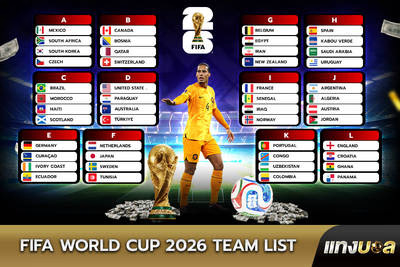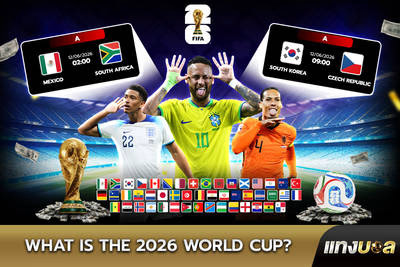
The FIFA World Cup 2026 Teams are listed below.
- Hosts (3 Teams): Canada, Mexico, and the United States earned automatic qualification as co-hosts, bypassing traditional regional qualification rounds across CONCACAF's competitive pathway.
- Asian Football Confederation or Asia (9 Teams): Australia, Iran, Iraq, Japan, Jordan, Qatar, Saudi Arabia, South Korea, and Uzbekistan qualified through the AFC's expanded allocation, the largest in the confederation's World Cup history.
- Confederation of African Football or Africa (10 Teams): Algeria, Cape Verde, DR Congo, Egypt, Ghana, Ivory Coast, Morocco, Senegal, South Africa, and Tunisia qualified through CAF's largest-ever World Cup allocation across North, West, and sub-Saharan Africa.
- Union of European Football Associations or Europe (16 Teams): Austria, Belgium, Bosnia and Herzegovina, Croatia, Czech Republic, England, France, Germany, Netherlands, Norway, Portugal, Scotland, Spain, Sweden, Switzerland, and Turkey qualified through UEFA's competitive multi-round qualification process.
- South American Football Confederation or South America (6 Teams): Argentina, Brazil, Colombia, Ecuador, Paraguay, and Uruguay qualified through CONMEBOL's highly competitive South American qualifying campaign across the FIFA World Cup 2026 allocation.
- CONCACAF or North and Central America (6 Teams): Canada, Curaçao, Haiti, Mexico, Panama, and the United States represent the confederation's full allocation, including three automatic host-nation berths and three earned qualification spots.
- Oceania Football Confederation or Oceania (1 Team): New Zealand qualified through the OFC playoff, earning Oceania's first-ever guaranteed direct World Cup berth under the expanded 48-team format for the first time in tournament history.
Hosts
The hosts for the FIFA World Cup 2026 are listed below.
- Canada: Canada enters its second-ever World Cup appearance, fielding a squad of MLS and European-based talent led by Bayern Munich's Alphonso Davies, with all group stage matches played on home soil across Toronto and Vancouver. Domestic player development in Canada runs through a structured pyramid, with the Canadian Football League serving as the top professional tier in the country.
- Mexico: Mexico becomes the first nation to host the FIFA World Cup three times, opening the entire tournament on June 11 at Estadio Azteca against South Africa, competing in Group A alongside South Korea, South Africa, and the Czech Republic. Liga MX operates as Mexico's top professional division, and the Mexican Football League feeds directly into the national team's player pipeline.
- United States: The United States enters as co-host in Group D alongside Paraguay, Australia, and Türkiye, with AC Milan's Christian Pulisic anchoring the attack across a squad drawn from MLS and European clubs. The US Soccer Football League functions as the primary domestic competition from which the national team sources its core roster pool.
Canada
The Canadian national team enters its second-ever World Cup appearance, having debuted at the 2022 edition in Qatar after a 36-year absence. The team is placed in Group B alongside Switzerland, Qatar, and Bosnia and Herzegovina, with all three group-stage matches scheduled on home soil in Toronto and Vancouver. Canada's squad blends experienced MLS talent with players competing across top European leagues. Alphonso Davies leads the team as its marquee star, playing his club football at Bayern Munich. Fans tracking the team's performances can follow developments through the Canadian Football League.
Mexico
The Mexican national team holds the distinction of being the first country to host the FIFA World Cup three times, adding 2026 to its 1970 and 1986 editions. El Tri opens the entire tournament on June 11 at the iconic Estadio Azteca in Mexico City against South Africa. Placed in Group A alongside South Korea, South Africa, and the Czech Republic, Mexico enters as an experienced side at the tournament. The team draws its squad from Liga MX and top European clubs, fielding a generation known for technical precision. Fans and analysts covering the squad's journey follow updates through the Mexican Football League.
United States
The United States national team enters the tournament as a co-host, automatically qualifying for the group stage placed in Group D alongside Paraguay, Australia, and Türkiye. The team's opener on June 12 takes place at SoFi Stadium in Inglewood, California, against Paraguay. The squad, built heavily around MLS and European-based talent, stands as one of football's fastest-growing programs. Christian Pulisic, playing his club football at AC Milan, anchors the attack. Coverage of the team's preparation and performances flows regularly through the US Soccer Football League.
Asian Football Confederation or Asia
The Asian Football Confederation, or Asia, for the FIFA World Cup 2026, is listed below.
- Japan: Japan secured its eighth straight World Cup spot on March 20, 2025, entering Group F with the Netherlands, Sweden, and Tunisia. The Japan Football League develops technical players who anchor the Samurai Blue squad.
- South Korea: South Korea reached its tenth straight World Cup, joining Group A with Mexico, South Africa, and the Czech Republic, led by Son Heung-min. The Korean Football League builds the squad’s technical and physical base.
- Iran: Iran enters Group G with Belgium, New Zealand, and Egypt, using a disciplined defensive system. The Iran Football League supplies key defenders and supports the team’s structured style.
- Saudi Arabia: Saudi Arabia joins Group H with Spain, Uruguay, and Cape Verde, backed by strong league investment after the 2022 Argentina upset. The Saudi Arabia Football League raises domestic competition through global talent.
- Qatar: Qatar qualifies through standard rounds and enters Group B with Canada, Switzerland, and Bosnia and Herzegovina. The Qatar Football League supports Aspire Academy graduates in professional play.
- Iraq: Iraq secured a 2–1 playoff win over Bolivia on March 31, 2026, and enters Group I with France, Norway, and Senegal. The Iraq Football League develops the squad’s competitive core.
- Australia: Australia enters Group D with the United States, Paraguay, and Türkiye, relying on Europe-based players. The Australia Football League prepares emerging talent before international moves.
- Uzbekistan: Uzbekistan earned its first World Cup spot and joins Group K with Colombia, DR Congo, and Germany. The Uzbekistan Football League develops the players behind the historic qualification.
- Jordan: Jordan reached its first World Cup and enters Group J with Argentina, Algeria, and Austria. The Jordan Football League supports the national program that achieved the milestone.
Japan
Japan became the first nation outside the three host countries to qualify for the 2026 World Cup, securing its eighth consecutive finals appearance on March 20, 2025. The Samurai Blue is placed in Group F alongside the Netherlands, Sweden, and Tunisia. Japan's squad features a core of players performing at the highest level of European club football, including stars from the Bundesliga and Serie A. The team's tactical discipline and pressing style make it one of Asia's strongest contenders. Fans tracking Japan's fixtures and standings access the latest news through the Japan Football League.
South Korea
South Korea: South Korea qualified for its tenth consecutive World Cup, extending one of the longest active streaks in tournament history. The team drew into Group A alongside Mexico, South Africa, and the Czech Republic, facing a tough path out of the group stage. The squad features Son Heung-min of Tottenham Hotspur as its recognized international star. South Korea's playing style blends physicality with technical buildup from midfield. Updates on the team's campaign and match results appear regularly through the Korean Football League.
Iran
Iran qualified as one of Asia's strongest defensive sides, earning its place in Group G alongside Belgium, New Zealand, and Egypt. Team Melli brings a track record of deep World Cup appearances spanning multiple decades, with six total finals appearances. Iran's squad draws from the Persian Gulf Pro League and a growing number of European-based players. The team's defensive solidity and disciplined pressing make it a difficult opponent. Match previews, stats, and results flow through the Iran Football League.
Saudi Arabia
Saudi Arabia qualified with a squad significantly strengthened by the arrival of international stars now playing in the Saudi Pro League. The team drew into Group H alongside Spain, Uruguay, and Cape Verde, presenting a difficult group stage. The Green Falcons carry the memory of their historic 2022 upset over Argentina as motivation entering 2026. Saudi Arabia's domestic league has raised the quality of its national player pool in recent years. Coverage of the team's tournament journey runs through the Saudi Arabia Football League.
Qatar
Qatar earned its first qualification through traditional qualifying rounds, having previously only appeared at the 2022 World Cup as automatic hosts. The team was placed in Group B alongside Canada, Switzerland, and Bosnia and Herzegovina. The Maroon squad benefits from years of intensive football development investment following the 2022 hosting experience. Qatar's technical players and high-tempo pressing style reflect the coaching influence of the Aspire Academy system. Fans follow the team's progress and fixture results through the Qatar Football League.
Iraq
Iraq secured the final spot in the 2026 FIFA World Cup field, claiming qualification through the intercontinental playoff by defeating Bolivia 2–1 on March 31, 2026. The Lions of Mesopotamia are placed in Group I alongside France, Norway, and Senegal. Iraq's qualification marks a return to the World Cup after a long absence, carrying the hopes of millions of passionate fans across the Middle East. The team's strength lies in fast transitional play and physicality through midfield. Supporters follow the team's tournament buildup through the Iraq Football League.
Australia
Australia qualified as one of Asia's nine representatives, earning a spot in Group D alongside the United States, Paraguay, and Türkiye. The Socceroos bring experience from multiple World Cup campaigns and a squad built around players in European professional leagues. Mitchell Duke and a new generation of Australian talent form the core of the squad heading into the tournament. Australia's qualifying run under the AFC was competitive, reinforcing the team's standing as a consistent presence in global football. Followers of Australian football track fixtures and squad news through the Australia Football League.
Uzbekistan
Uzbekistan qualified for the FIFA World Cup for the first time in the nation's history, marking a breakthrough moment for Central Asian football. The White Wolves are placed in Group K alongside Colombia, DR Congo, and Germany. Uzbekistan's qualification reflects years of investment in youth football systems and coaching development across the country. The squad features a mix of domestically based players and those competing in leagues across Europe and Asia. News and match coverage for the team flows through the Uzbekistan Football League.
Confederation of African Football or Africa
The Confederation of African Football, or Africa, for the FIFA World Cup 2026 is listed below.
- Morocco: Morocco enters as Africa's top-ranked team, building on the historic 2022 semifinal run, competing in Group C alongside Brazil, Haiti, and Scotland. The Morocco Football League acts as the domestic competition where national team talent develops before transitioning to European clubs across La Liga, Ligue 1, and the Premier League.
- Senegal: Senegal competes in Group I alongside France, Iraq, and Norway, bringing physical intensity and technical quality led by Sadio Mané across a deep and experienced squad. The Senegal Football League functions as the primary domestic competition that identifies and develops the raw talent pipeline feeding the Lions of Teranga national program.
- Ghana: Ghana returns to the World Cup after missing the 2022 tournament, fielding a talented squad with attacking flair and physicality throughout midfield. The Ghana Football League operates as the country's top professional division, nurturing the talent base from which the Black Stars build their internationally competitive roster.
- Egypt: Egypt competes in Group G alongside Belgium, Iran, and New Zealand, anchored by Liverpool's Mohamed Salah as the squad's recognized global star. The Egypt Football League operates as one of Africa's oldest and most competitive domestic divisions, supplying the Pharaohs with experienced players across every position.
- Algeria: Algeria draws into Group J alongside Argentina, Austria, and Jordan, fielding a technically skilled squad drawing from Ligue 1, the Premier League, and the Saudi Pro League. The Algeria Football League acts as the domestic professional competition where emerging national team players gain competitive experience before pursuing careers abroad.
- Tunisia: Tunisia competes in Group F alongside the Netherlands, Sweden, and Japan, bringing a defensively organized side with proven international tournament experience. The Tunisia Football League functions as the Eagles of Carthage's primary talent development system, producing disciplined and tactically structured players for the national program.
- South Africa: South Africa plays the tournament's opening match on June 11 at Estadio Azteca against Mexico, competing in Group A alongside South Korea and the Czech Republic. The South Africa Football League operates as the country's top professional division, developing the Bafana Bafana squad that earned the tournament's historically significant opening fixture.
- Ivory Coast: Ivory Coast competes in Group E alongside Germany, Ecuador, and Curaçao as the reigning 2023 AFCON champions, drawing from Premier League, Ligue 1, and Serie A talent. The Ivory Coast Football League acts as the domestic foundation from which the Elephants' younger generation transitions into high-level European professional competition.
- Cape Verde: Cape Verde qualifies for the World Cup, placed in Group H alongside Spain, Uruguay, and Saudi Arabia, representing one of Africa's compelling underdog stories in the expanded field. The Cape Verde Football League operates as the small island nation's professional competition, developing players who pursue careers in Portuguese and other European leagues.
Morocco
Morocco enters the 2026 World Cup as Africa's highest-ranked team, building on its historic run to the 2022 semifinals, where it became the first African nation to reach that stage. The Atlas Lions are placed in Group C alongside Brazil, Haiti, and Scotland. The squad features technically gifted players from top European clubs, including Achraf Hakimi of Paris Saint-Germain. Morocco's collective defensive shape and fast counter-attacking play define the team's identity. Tournament match coverage and squad analysis flow through the Morocco Football League.
Senegal
Senegal qualified as one of West Africa's powerful football nations, carrying the weight of its 2022 AFCON title and 2002 World Cup semifinal legacy. The Lions of Teranga are placed in Group I alongside France, Iraq, and Norway. The team's physical intensity, technical quality, and leadership from players like Sadio Mané define its style. Senegal's squad depth across attacking and defensive positions makes it a difficult opponent at any stage. Fans access match fixtures, results, and squad updates through the Senegal Football League.
Ghana
Ghana returns to the World Cup after missing the 2022 tournament, bringing a talented squad with attacking flair and physicality throughout midfield. The Black Stars' placement in their group reflects a team rebuilding under a new generation of players. Ghana's footballing culture runs deep, with fans among the passionate on the African continent. The team's history includes reaching the 2010 quarterfinals, a benchmark the current squad aspires to match. Followers of Ghanaian football access updates and match data through the Ghana Football League.
Egypt
Egypt qualified as one of North Africa's strongest sides, placed in Group G alongside Belgium, Iran, and New Zealand. The Pharaohs carry a rich World Cup history and draw heavily from a talented domestic league supplemented by European-based players. Mohamed Salah of Liverpool F.C. anchors the attack and stands as the team’s top global star. Egypt's qualification signals the continued strength of North African football within the CAF system. Comprehensive team coverage and match analysis run through the Egypt Football League.
Algeria
Algeria qualified for the tournament and drew into Group J alongside Argentina, Austria, and Jordan. The Desert Foxes bring a technically skilled squad shaped by players competing across Ligue 1, the Premier League, and the Saudi Pro League. Algeria's 2019 AFCON title confirms the team's quality as a legitimate contender. The squad's pace and technical creativity in attacking areas present challenges for any opponent. Fans and analysts covering the team's World Cup campaign follow updates through the Algeria Football League.
Tunisia
Tunisia qualified as one of North Africa's consistent World Cup participants, placing in Group F alongside the Netherlands, Sweden, and Japan. The Eagles of Carthage bring a defensively organized side with proven experience at the highest international level. Tunisia's qualifying campaign demonstrated depth across the squad, with contributions from both domestic league players and those based in Europe. The team's tactical discipline makes it a competitive opponent during the group stage. Match results, previews, and standings appear through the Tunisia Football League.
South Africa
South Africa qualified and earned the distinction of playing the opening match of the 2026 World Cup on June 11 against host nation Mexico at the Estadio Azteca. Bafana Bafana's inclusion adds a historically symbolic layer to the tournament, recalling the 2010 World Cup hosted on African soil. Placed in Group A alongside Mexico, South Korea, and the Czech Republic, South Africa faces a competitive group stage. The team's qualification reflects a resurgence in South African football systems and player development. Fans follow the team's journey through the South Africa Football League.
Ivory Coast
Ivory Coast qualified as one of West Africa's powerhouse nations, placed in Group E alongside Germany, Ecuador, and Curaçao. The Elephants bring a squad filled with players competing in top European leagues, including those in the Premier League, Ligue 1, and Serie A. Ivory Coast's 2023 AFCON title confirms the team's current standing as Africa's top competitive side. The team's blend of experience and youthful talent makes it a genuine threat to advance deep into the knockout stages. Team news, fixtures, and results flow through the Ivory Coast Football League.
Cape Verde
Cape Verde qualifies for the 2026 World Cup as one of Africa's exciting emerging nations, drawn into Group H alongside Spain, Uruguay, and Saudi Arabia. The Blue Sharks' qualification is a milestone achievement for a small island nation with limited football resources compared to traditional African powerhouses. The squad, built primarily around players competing in European professional leagues, punches well above its weight class. Cape Verde's history-making appearance in a group against Spain adds a compelling underdog narrative to the tournament. Fans track the team's historic run through the Cape Verde Football League.
Union of European Football Associations or Europe
The Union of European Football Associations, or Europe for the FIFA World Cup 2026 is listed below.
- England: England fields a Premier League-based squad led by Jude Bellingham and Harry Kane, aiming for the title after recent deep runs. The England Football League supports talent growth across England’s domestic pyramid.
- France: France enters as a top-ranked side led by Kylian Mbappé, backed by elite depth from recent World Cup success. The France Football League drives talent development through Ligue 1’s competitive structure.
- Germany: Germany blends veteran experience with rising talent developed through the Bundesliga system. The Germany Football League shapes a disciplined and tactically structured national squad.
- Spain: Spain leads the field with a young core after winning the 2024 UEFA Euro. The Spain Football League produces technically skilled players who define La Roja’s style.
- Portugal: Portugal relies on Cristiano Ronaldo, supported by Bruno Fernandes and Rafael Leão in attack. The Portugal Football League develops players who compete across Europe’s top clubs.
- Netherlands: The Netherlands features a strong defense led by Virgil van Dijk and dynamic attackers like Cody Gakpo. The Netherlands Football League builds technically refined players for the national team.
- Belgium: Belgium continues its transition with Romelu Lukaku leading the attack. The Belgium Football League develops players who shaped the national team’s golden era.
- Croatia: Croatia leans on Luka Modrić’s leadership after strong World Cup finishes. The Croatia Football League produces disciplined players who support an experienced squad.
- Switzerland: Switzerland brings a structured and defensive style with experienced midfield control. The Switzerland Football League develops organized and technically sound players.
- Austria: Austria fields a squad with Bundesliga experience, led by Marcel Sabitzer and David Alaba. The Austria Football League develops players who advance to top European leagues.
- Scotland: Scotland returns to the World Cup after 28 years with a competitive squad. The Scotland Football League produces players who secured qualification.
- Norway: Norway features Erling Haaland as a key striker in a rising squad. The Norway Football League develops emerging talents who compete at elite levels.
- Sweden: Sweden qualifies through the Nations League playoff route with a balanced squad. The Sweden Football League builds strong and technically capable players.
- Turkey: Türkiye returns after 24 years with a new generation led by Arda Güler. The Turkey Football League develops talent through a growing domestic league.
- Czech Republic: Czechia fields a squad with Bundesliga and domestic experience. The Czech Republic Football League produces organized and competitive players.
- Bosnia and Herzegovina: Bosnia and Herzegovina qualifies after a penalty shootout win over Italy. The Bosnia and Herzegovina Football League develops players who have achieved qualification success.
England
England qualified and drew into Group L alongside France's pathway opponents, placed alongside Panama and Senegal in Group I's rival cluster, earning a spot in a competitive knockout pathway. The Three Lions bring a squad stacked with Premier League talent across every position, with Jude Bellingham and Harry Kane headlining the roster. England's ambitions remain high after reaching the 2021 Euros final and the 2022 World Cup quarterfinals. The team's tactical flexibility under its current coaching setup gives it options in both attacking and defensive phases. Comprehensive England match coverage and performance analysis flow through the England Football League.
France
France qualified as the world's third-ranked team and drew into Group I alongside Iraq, Norway, and Senegal. Les Bleus, led by Kylian Mbappé, enter the tournament as one of the top title favorites based on squad depth and individual quality. France's 2018 World Cup title and 2022 runner-up finish establish the team as a consistent performer in recent tournament history. The squad's balance across all positions, from goalkeeper to striker, makes it one of the complete international sides in the competition. Updates on France's campaign and detailed squad analysis run through the France Football League.
Germany
Germany qualified and was placed in Group K alongside Colombia, Uzbekistan, and DR Congo. Die Mannschaft enters the tournament following a rebuilding phase under Hansi Flick's successor, combining experienced veterans with a talented generation of younger players. Germany's tradition of deep World Cup runs, including four titles, makes every edition a target for its squad. The team's tactical structure and pressing intensity remain hallmarks of the German playing style. Followers of German football access fixtures and squad news through the Germany Football League.
Spain
Spain enters the 2026 World Cup as the top-ranked team in the entire field, drawn into Group H alongside Saudi Arabia, Uruguay, and Cape Verde. La Roja's squad features a golden generation of technically gifted players, led by Pedri, Gavi, and Lamine Yamal from Barcelona. Spain's 2024 UEFA Euro title confirms the team's current status as Europe's and global football's dangerous side. The team's possession-based style and high press create consistent attacking opportunities against any opposition. Detailed Spain tournament coverage and match analysis run through the Spain Football League.
Portugal
Portugal qualified with Cristiano Ronaldo, now playing in the Saudi Pro League, still featuring as a central figure in the squad's attacking setup. The team's placement in Group L alongside Panama, Senegal, and fellow qualifiers gives Portugal a competitive but manageable group stage path. Portugal's depth at attacking midfielder and winger positions, including Bruno Fernandes and Rafael Leão, provides multiple routes to goal. The team's qualification came with strong performances across the UEFA qualifying campaign. Fans and analysts covering Portugal's World Cup run follow updates through the Portugal Football League.
Netherlands
The Netherlands qualified and drew into Group F alongside Japan, Sweden, and Tunisia. The Dutch squad, built around a core of Premier League and Bundesliga talent, enters the tournament with a blend of experience and pace in attacking positions. Virgil van Dijk leads the defense while Xavi Simons and Cody Gakpo provide attacking dynamism. The Netherlands' recent strong form in the UEFA Nations League signals a team in competitive shape heading into the tournament. Match analysis, squad updates, and tournament coverage run through the Netherlands Football League.
Belgium
Belgium qualified and was placed in Group G alongside Iran, New Zealand, and Egypt. The Red Devils bring a squad that blends several members of the "golden generation" with younger players now stepping into leadership roles. Romelu Lukaku's physical presence in attack remains a central element of Belgium's tactical approach. Belgium's European club football representation spans the Premier League, Serie A, and Bundesliga. Followers of Belgian football track the team's tournament journey and results through the Belgium Football League.
Croatia
Croatia qualified and was placed in Group F's adjacent competition bracket, facing opponents across a competitive group stage path. The Vatreni carry the legacy of their 2018 World Cup final run and 2022 third-place finish as the benchmark for the current squad. Luka Modrić continues to anchor Croatia's midfield as one of international football's decorated players. Croatia's ability to grind results through tactical discipline and individual brilliance makes the team dangerous regardless of group placement. Coverage of Croatia's fixtures and squad news flows through the Croatia Football League.
Switzerland
Switzerland qualified and drew into Group B alongside Canada, Qatar, and Bosnia and Herzegovina. The Swiss bring a tactically organized side with strong defensive foundations and technical midfield players. Switzerland's consistent presence at major tournaments reflects a well-structured domestic football system. The team's experience in knockout competition, reaching the 2021 Euros quarterfinals and the 2022 World Cup Round of 16, demonstrates competitive resilience. Fans access Switzerland squad updates and match coverage through the Switzerland Football League.
Austria
Austria qualified and drew into Group J alongside Argentina, Algeria, and Jordan. The squad, built around Bundesliga-heavy talent including Marcel Sabitzer and David Alaba, stands as one of Austria's strongest World Cup rosters in decades. Austria's attacking midfield quality and aggressive pressing style suit the demands of the 48-team expanded format. The team's first-ever World Cup knockout stage qualification remains a key ambition entering the tournament. Updates on Austria's campaign and match data appear through the Austria Football League.
Scotland
Scotland qualified for the World Cup for the first time since the 1998 tournament in France, making their return to the global stage after a 28-year absence. The team drew into Group C alongside Brazil, Haiti, and Morocco. Scotland's qualification, earned through the UEFA qualifying rounds, reflects steady improvement in the national program under Steve Clarke's management. The squad features players from the Premier League and Scottish Premiership, bringing physicality and direct attacking play. Supporters of Scottish football follow the historic run and match previews through the Scotland Football League.
Norway
Norway qualified and drew into Group I alongside France, Iraq, and Senegal. The squad is headlined by Erling Haaland, broadly regarded as one of the world's top strikers following his record-breaking performances at Manchester City. Norway's style centers on Haaland's physical dominance, backed by technically capable midfield and wide players. The team's qualification marks a return to the World Cup stage for one of European football's consistent qualifying campaigns. News, match previews, and squad data flow through the Norway Football League.
Sweden
Sweden qualified through the UEFA playoff process, becoming the first European nation to reach the World Cup after qualifying solely through the UEFA Nations League route. The team drew into Group F alongside the Netherlands, Japan, and Tunisia. Sweden's qualifying campaign demonstrated determination and tactical adaptability under pressure, defeating Poland in a critical playoff match. The squad's direct style and aerial strength through set pieces remain consistent features of the Swedish game. Fans track the team's progress and match results through the Sweden Football League.
Turkey
Turkey qualified through the UEFA playoff process, defeating Kosovo 1–0 in the final on March 31, 2026, marking the team's first World Cup appearance in 24 years. The squad drew into Group D alongside the United States, Paraguay, and Australia. Türkiye's return to the World Cup stage carries significant weight given the nation's passionate football culture and growing league systems. Arda Güler, the young Real Madrid midfielder, marks the new generation leading the team. Coverage of Türkiye's tournament campaign runs through the Turkey Football League.
Czech Republic
Czech Republic (Czechia) qualified through the UEFA playoff process and drew into Group A alongside Mexico, South Korea, and South Africa. The team's consistent qualifying performances reflect a well-organized football program with strong European club representation. Czechia's midfield depth and tactical flexibility under their current coaching setup give the team multiple competitive options. The squad's experience in major tournaments, including UEFA Euro campaigns, provides a foundation for navigating a tough group stage. Fans access the Czech Republic squad news and match analysis through the Czech Republic Football League.
Bosnia and Herzegovina
Bosnia and Herzegovina qualified for the 2026 World Cup through the UEFA playoff Path A, defeating Italy 1–1 after extra time before winning on penalties 4–1 on March 31, 2026. The team drew into Group B alongside Canada, Switzerland, and Qatar. Bosnia's qualification marked Italy's historic exit from the tournament, with the Azzurri becoming the first former World Cup champion to miss three consecutive editions. The squad's ability to grind through penalty shootouts under pressure signals a strong mentality heading into the group stage. Updates on Bosnia's campaign and squad coverage run through the Bosnia and Herzegovina Football League.
South American Football Confederation or South America
The South American Football Confederation, or South America, for the FIFA World Cup 2026 is listed below.
- Argentina: Argentina enters as defending champions, ranked second globally, competing in Group J alongside Algeria, Austria, and Jordan, led by Inter Miami's Lionel Messi. The Argentina Football League operates as the Primera División, the domestic competition that shaped the generation of players now defending the World Cup title.
- Brazil: Brazil competes in Group C alongside Morocco, Haiti, and Scotland, with Real Madrid's Vinicius Jr. anchoring a talented squad built across the Premier League, La Liga, and Serie A. The Brazil Football League operates as the Brasileirão, the domestic competition producing the technically expressive players who define the Seleção's attacking identity.
- Uruguay: Uruguay competes in Group H alongside Spain, Saudi Arabia, and Cape Verde, with Darwin Núñez and Federico Valverde representing a new generation of competitive talent. The Uruguay Football League operates as the Primera División de Uruguay, the domestic competition that builds disciplined and physically direct players, defining the Celeste's international style.
- Colombia: Colombia competes in Group K alongside Germany, Uzbekistan, and DR Congo, carrying momentum from the 2024 Copa América final run with James Rodríguez providing creative influence. The Colombia Football League operates as the Categoría Primera A, the domestic competition that develops the technically dynamic players who power Colombia's high-pressing international style.
- Paraguay: Paraguay competes in Group D alongside the United States, Australia, and Türkiye, bringing a physically organized squad known for defensive resilience and counter-attacking transitions. The Paraguay Football League operates as the División de Honor, the domestic competition that develops the disciplined defensive players defining the Albirroja's competitive international identity.
- Ecuador: Ecuador competes in Group E alongside Germany, Ivory Coast, and Curaçao, with Chelsea's Moisés Caicedo anchoring a direct and physical midfield. The Ecuador Football League operates as the Liga Pro, the domestic competition that develops the physically direct players who form La Tri's competitive CONMEBOL qualifying foundation.
Argentina
Argentina enters the 2026 World Cup as defending champions after their victory at the 2022 tournament in Qatar, placing them as the second-ranked team in the full 48-team field. The Albiceleste drew into Group J alongside Algeria, Austria, and Jordan. Lionel Messi, now playing in MLS with Inter Miami, continues to lead the squad as the greatest player in the tournament's modern era. Argentina's depth across midfield and attack, combined with the pressure of defending the title, creates a compelling storyline throughout the competition. Fans worldwide follow the champion's campaign through the Argentina Football League.
Brazil
Brazil qualified and drew into Group C alongside Morocco, Haiti, and Scotland, placing the five-time World Cup champions in the anticipated groups of the tournament. The Seleção brings a talented squad featuring players from the Premier League, La Liga, and Serie A, with Vinicius Jr. of Real Madrid as the team's primary attacking threat. Brazil's 2022 quarterfinal exit motivates the squad to push deeper in the 2026 edition. The team's attacking creativity and flair make every Brazil match appointment viewing for football fans globally. Tournament updates, match results, and squad analysis flow through the Brazil Football League.
Uruguay
Uruguay qualified and drew into Group H alongside Spain, Saudi Arabia, and Cape Verde. The Celeste brings a physically disciplined squad with experience at the highest international level, drawing on a tradition that includes two FIFA World Cup titles. Darwin Núñez and Federico Valverde lead a new generation of Uruguayan talent combining physicality with technical quality. Uruguay's direct style and set-piece threat make the team competitive against any opposition in the group stage. Fans access Uruguay's tournament fixtures and squad coverage through the Uruguay Football League.
Colombia
Colombia qualified and was placed in Group K alongside Germany, Uzbekistan, and DR Congo. The team's 2023 Copa América final run, where the team reached the final unbeaten before losing to Argentina, signals the squad's current competitive peak. James Rodríguez, now in the later stages of his career, continues to influence games through technical vision and set-piece delivery. Colombia's attacking depth and pressing intensity make the team one of South America's dynamic sides. Coverage of Colombia's World Cup campaign and match results runs through the Colombia Football League.
Paraguay
Paraguay qualified and drew into Group D alongside the United States, Australia, and Türkiye. The Albirroja bring a physical, organized squad known for defensive resilience and fast counter-attacking transitions. Paraguay's inclusion in a group with co-host USA adds significant commercial and competitive interest to the group stage. The team's qualification reflects consistent improvement in CONMEBOL's highly competitive South American qualifying campaign. Fans follow Paraguay's fixtures and tournament updates through the Paraguay Football League.
Ecuador
Ecuador competes in Group E alongside Germany, Ivory Coast, and Curaçao, bringing a physically direct and technically capable squad built around Chelsea's Moisés Caicedo, anchoring a competitive midfield. La Tri's consistent CONMEBOL qualifying performances across multiple World Cup cycles confirm the nation's growing football systems and coaching depth. Ecuador's squad draws from European professional leagues and MLS, combining experienced campaigners with a younger generation pushing for starting positions. The Ecuador Football League operates as Liga Pro, the domestic competition that builds La Tri's foundational player base before talents earn moves into South American football's competitive international leagues.
Confederation of North, Central America, and Caribbean Association Football or North and Central America
The Confederation of North, Central America, and Caribbean Association Football, or North and Central America, for the FIFA World Cup 2026, is listed below.
- Panama: Panama competes in Group L alongside Portugal and fellow qualifiers, carrying momentum from the nation's debut World Cup appearance at the 2018 tournament in Russia. The Panama Football League operates as the Liga Panameña de Fútbol, the domestic competition that develops the physically organized defensive players forming the Canaleros' competitive identity.
- Hait: Haiti qualifies for the World Cup, competing in Group C alongside Brazil, Morocco, and Scotland, joining Curaçao as the first two Caribbean nations at the same tournament. The Haiti Football League operates as the Ligue Haïtienne, the domestic competition from which the Grenadiers' player development pathway connects to MLS and European professional leagues.
- Curaçao: Curaçao qualifies as the smallest nation by population ever to reach the FIFA World Cup, competing in Group E alongside Germany, Ivory Coast, and Ecuador. The Curaçao Football League operates as the domestic competition for the island nation, developing players who earn professional contracts across European and American leagues.
Panama
Panama qualified as one of CONCACAF's strongest non-host nations, drawing into Group L alongside Portugal and qualifying opponents. The Canaleros carry the memory of their debut World Cup appearance at the 2018 tournament in Russia as fuel for the current squad. Panama's physical defensive style and organized team structure make the team difficult to break down. The squad draws from MLS-based players and those competing in Central American leagues. Fans track Panama's group stage performance and fixtures through the Panama Football League.
Haiti
Haiti qualified for the 2026 World Cup alongside Curaçao, making the two Caribbean nations the first pair to appear at the same World Cup together. The Grenadiers drew into Group C alongside Brazil, Morocco, and Scotland. Haiti's qualification marks a proud moment for Caribbean football and stands as an inspiring story from the 2026 qualifying cycle. The squad features players from Major League Soccer and European leagues who carry Haitian heritage. Coverage of Haiti's historic World Cup journey runs through the Haiti Football League.
Curaçao
Curaçao qualified for the 2026 FIFA World Cup as the smallest nation by population ever to reach the tournament, a landmark achievement for Caribbean football. Placed in Group E alongside Germany, the Ivory Coast, and Ecuador, the team faces the challenging groups in the field. Curaçao's qualification journey reflects years of investment in football development systems across the small Dutch Caribbean island. The team's players compete across European and American leagues, building a competitive roster from a limited talent pool. Continued progress links closely to development efforts tied to the Curaçao football league.
Oceania Football Confederation or Oceania
The Oceania Football Confederation, or Oceania, for the FIFA World Cup 2026 is listed below.
- New Zealand: New Zealand qualifies through the OFC playoff, competing in Group G alongside Belgium, Iran, and Egypt. The New Zealand Football League operates as the National League, developing the All Whites' competitive squad.
New Zealand
New Zealand qualified through the OFC playoff process, earning Oceania its first-ever guaranteed direct berth at a FIFA World Cup. The All Whites drew into Group G alongside Belgium, Iran, and Egypt. New Zealand's qualification marks a historic moment for Oceania football, reflecting FIFA's decision to allocate the OFC its first guaranteed slot in the expanded format. The squad features players from Australian and European leagues, bringing a physical and direct style to the group stage. Fans and supporters follow the team's progress and fixtures through the New Zealand Football League.
Aditional Teams
The additional teams for the FIFA World Cup 2026 are listed below.
- Egypt: Egypt competes in Group G alongside Belgium, Iran, and New Zealand, anchored by Liverpool's Mohamed Salah as the squad's globally recognized star. The Egypt Football League operates as one of Africa's oldest and most competitive domestic divisions.
- DR Congo: DR Congo qualifies through the intercontinental playoff by defeating Jamaica 1–0, earning a place in Group K alongside Germany, Colombia, and Uzbekistan. The DR Congo Football League operates as Linafoot, the Leopards' primary domestic professional competition.
- Algeria: Algeria draws into Group J alongside Argentina, Austria, and Jordan, fielding a technically skilled squad drawing from Ligue 1, the Premier League, and the Saudi Pro League. The Algeria Football League develops emerging national team players before careers abroad.
- Jordan: Jordan qualifies for the FIFA World Cup for the first time in the nation's history through the intercontinental playoff, competing in Group J alongside Argentina, Algeria, and Austria. The Jordan Football League operates as the Jordan Pro League, developing the historic qualification generation.
Egypt
Egypt competes in Group G alongside Belgium, Iran, and New Zealand, carrying one of Africa's richest football histories into the 2026 FIFA World Cup. The Pharaohs draw heavily from a competitive domestic league supplemented by European-based players, with Liverpool's Mohamed Salah serving as the squad's globally recognized attacking threat. Egypt's qualifying campaign demonstrated consistent defensive organization and clinical finishing across the CAF qualification rounds. The national program has invested heavily in developing technically capable players who transition from domestic competition into professional leagues across Europe and the Gulf. The Egypt Football League operates as one of Africa's oldest and most established domestic professional divisions, supplying the Egyptian national team with experienced players across every position.
DR Congo
DR Congo qualified through the intercontinental playoff, defeating Jamaica 1–0 in the final to claim the final African berth at the 2026 World Cup. The Leopards are placed in Group K alongside Germany, Colombia, and Uzbekistan. DR Congo returns to the global stage as a historic African football nation, driven by a new generation of players and renewed competitive focus. The team's physicality and technical skill in midfield and attack give the squad competitive qualities at the tournament level. Supporters follow the team's tournament preparation and match updates through the DR Congo Football League.
Algeria
Algeria competes in Group J alongside Argentina, Austria, and Jordan, fielding a technically skilled squad drawing talent from Ligue 1, the Premier League, and the Saudi Pro League. The Desert Foxes carry the momentum of the 2019 Africa Cup of Nations title as a benchmark for the current generation's ambitions at the 2026 FIFA World Cup. Algeria's squad features players with deep European professional experience, giving the team tactical versatility across attacking and midfield positions. The Algeria Football League operates as the Ligue Professionnelle 1, the domestic competition that identifies and develops emerging Algerian national team players before professional moves abroad.
Jordan
Jordan qualified for the FIFA World Cup for the first time in the nation's history, earning a spot through the intercontinental playoff process. The Nash-shamiyoun drew into Group J alongside Argentina, Algeria, and Austria. Jordan's historic qualification generates enormous national pride and signals the rapid growth of football in West Asia. The squad's players span domestic and regional leagues, with a coaching setup focused on tactical discipline and counter-attacking play. Fans across the Arab world follow Jordan's World Cup journey through the Jordan Football League.