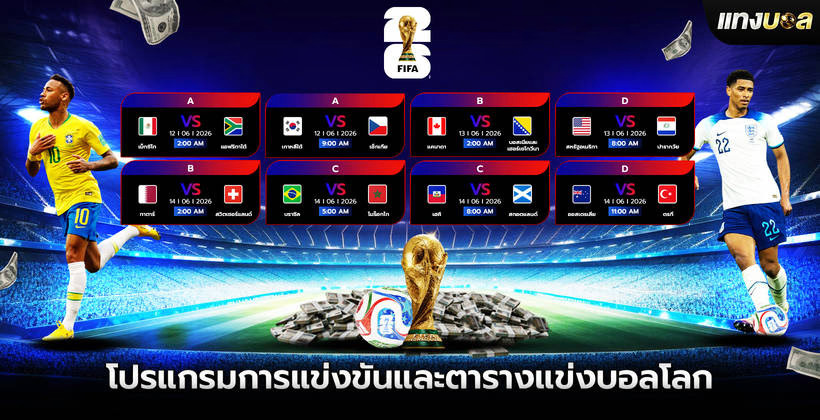
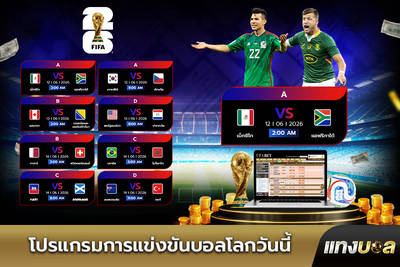
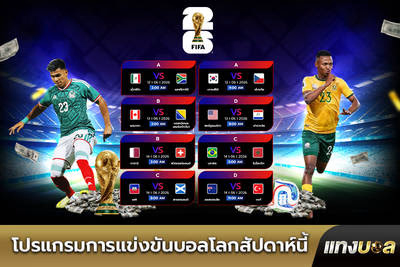
The World Cup schedule is created by FIFA through a structured planning process that begins after all qualified teams are confirmed. A “schedule” refers to the timeline of the tournament, while “fixtures” refer to the specific matches, including teams, dates, venues, and kickoff times. FIFA first conducts a seeded draw to place teams into groups, then builds the full match calendar based on tournament rules, rest periods, travel distance, and broadcasting needs. The fixtures are prepared by FIFA’s Competition Department in coordination with the Local Organizing Committee of the host country, stadium authorities, and broadcast partners to ensure fairness, logistics efficiency, and global coverage. Once finalized, the complete schedule is officially approved and released to the public.
When is the World Cup fixture list officially released?
The World Cup fixture list officially releases when the factors listed below are evaluated to create a workable season schedule.
- Club or Team Requests and Preferences. Requests submitted by teams or organizing bodies regarding match timing, rest days, or venue considerations (for example, avoiding extreme travel loads or stadium conflicts). These are important because they help reduce fatigue, maintain competitive fairness, and accommodate operational constraints.
- Television Broadcasting Requirements. Scheduling adjustments were made to maximize global viewership and time-zone compatibility. These ensure higher audience reach and commercial revenue, making broadcasting one of the most influential factors in final scheduling.
- Travel Considerations. Logistical planning that minimizes long-distance movement between venues. This is important to reduce player fatigue and ensure recovery time between matches.
- International Breaks. Predefined FIFA calendar windows where national teams compete. These ensure clubs release players and maintain consistency across international competitions.
- Stadium Availability. Ensures venues are not double-booked or undergoing maintenance. This is critical because World Cup matches require certified, fully prepared stadiums.
- Balanced Home and Away Games (Neutral Venue Balance). In World Cup tournaments, this refers to fair distribution of travel and match conditions across teams. It ensures no team gains an unfair logistical advantage.
- Weather and Seasonal Considerations. Scheduling adjusted to avoid extreme heat, rain, or unsafe conditions. This is especially important in host nations with varying climates.
Can World Cup matches be postponed after the schedule is announced?
Yes, matches in the FIFA World Cup can be postponed after the schedule is announced if exceptional disruptions occur, but only under FIFA approval and strict operational control tied to safety, logistics, or emergency conditions. Evidence from past tournament operations shows that the schedule is treated as fixed once released, yet remains flexible for extraordinary events (weather disruption, security alerts, public health crises, or infrastructure failure). The official World Cup match schedule is typically finalized and released to the public in the last week of May to the first week of June of the tournament year, after qualification rounds conclude and the final draw is completed, allowing teams, broadcasters, and host venues to align preparations before the opening match.
*****Do postponed World Cup fixtures impact league standings?*****No, postponed fixtures in the FIFA World Cup do not impact league standings because the tournament operates independently from domestic league systems and uses its own group-stage points and knockout progression structure. Evidence from football governance shows that World Cup results only affect advancement within the tournament, not club competitions or national league tables, since players represent national teams rather than clubs. Postponed matches are simply rescheduled within the tournament window and do not change standings in any external league system.
What is the structure of the World Cup season schedule?
The structure of the World Cup season schedule begins with a long qualification phase where national teams compete within their regional confederations over multiple years to earn a place in the final tournament. Once qualification is completed, FIFA releases the official match calendar for the final tournament, which is organized into a group stage followed by a knockout stage. In the group stage, teams are divided into groups and play round-robin matches to determine rankings, while the knockout stage progresses through elimination rounds, including the Round of 16, Quarterfinals, Semifinals, and the Final, with a third-place match also included. The schedule is designed with fixed matchdays, rest periods, and travel coordination across host cities to ensure fairness, recovery time, and global broadcast alignment.
Possible reasons for postponement are listed below.
- Extreme weather conditions (heat, storms, flooding)
- Security or safety threats
- Stadium or infrastructure failure
- Travel or logistical disruptions
- Government restrictions or emergencies
How is it settled? It is settled through a structured FIFA process that combines qualification results, a formal tournament draw, and centralized match planning. First, national teams secure participation through continental qualifiers organized by their regional confederations, which determine the final list of competing teams. After qualification, FIFA conducts a public draw ceremony where teams are placed into groups based on rankings and seeding rules to ensure competitive balance. Once groups are finalized, FIFA creates the full match calendar, assigning specific fixtures, venues, kickoff times, and rest-day spacing across host cities. This schedule is coordinated with broadcasters, stadium availability, travel logistics, and team recovery requirements before being officially released to the public.
When does the World Cup season officially begin each year?
The FIFA World Cup does not start every year because it is held every 4 years, not annually. The official tournament begins in June of the World Cup year, starting with the opening match after the host nation ceremony. This marks the beginning of the group stage phase, where all participating teams start competing. The timing is chosen to align with global football calendars, ensuring player availability, optimal weather conditions, and maximum international broadcasting reach. The tournament then continues through June and concludes in mid-July, usually during the 2nd or 3rd week of July, with the final match deciding the champion.